Welcome to my website! I'm a software engineer at Google Cloud AI, working on Gemini Enterprise —
systems that let businesses securely connect third-party tools to Gemini and enable agentic workflows across
their platforms.
I'm passionate about performance, scalability, and building reliable systems end-to-end. I'm also finishing
my master's degree at Brown University concurrently (expected May 2026, with one course left). ✨
Feel free to explore my work and connect — always happy to chat and build something cool together!
Know me!
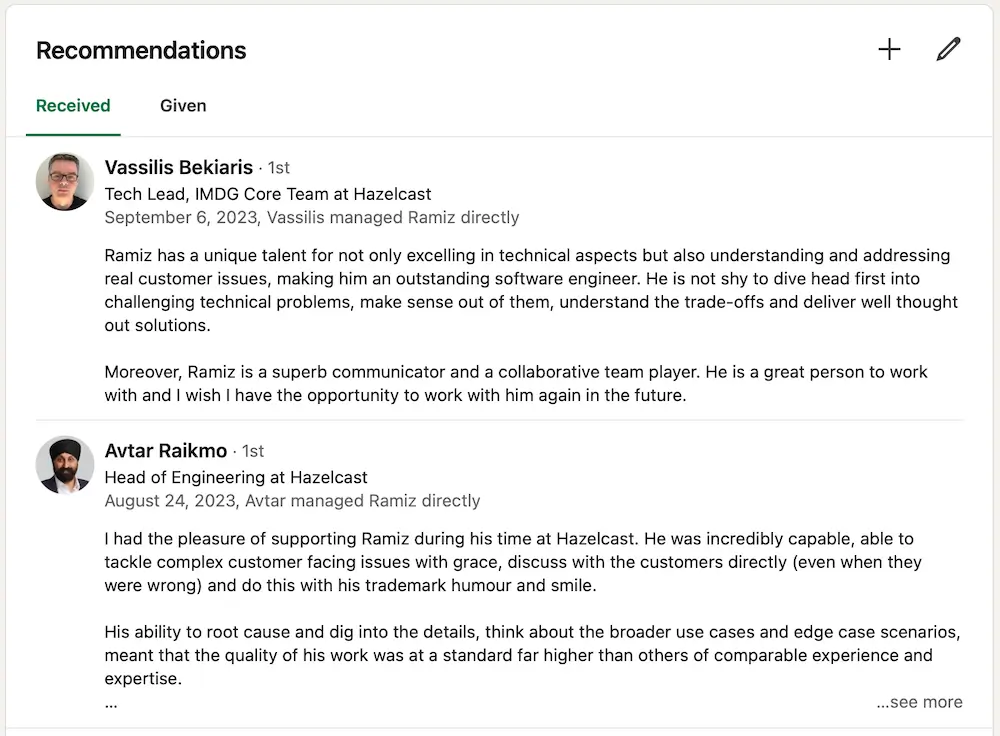
What my managers say about me. See more in my LinkedIn profile.What my lead thinks about my work, source.
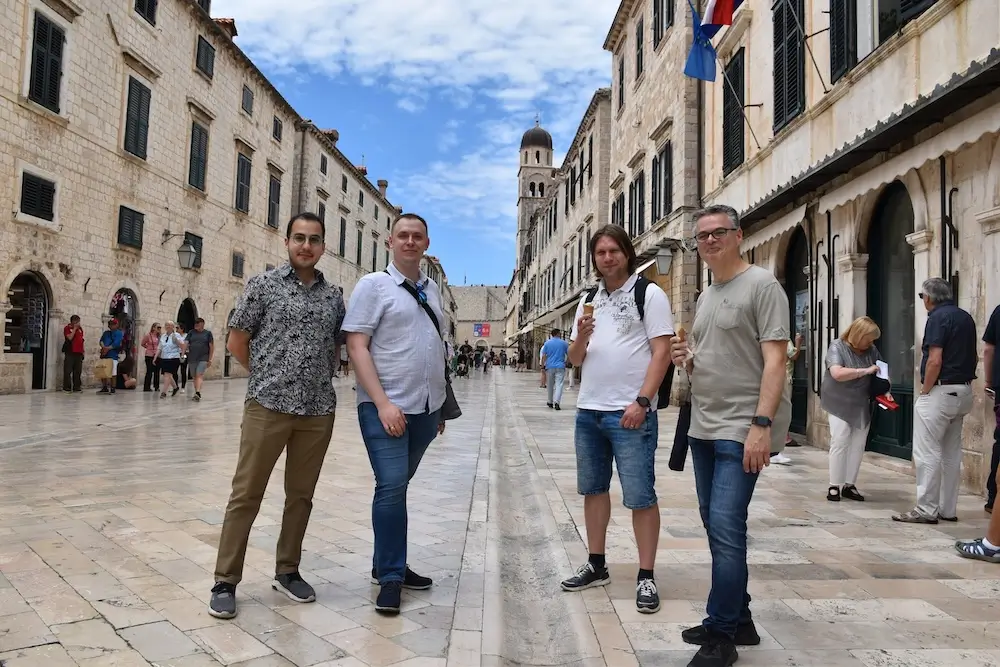
What others thinks about my work, source. Norman Maurer is one of the core developers
of Netty and a current Distinguished Engineer at Apple
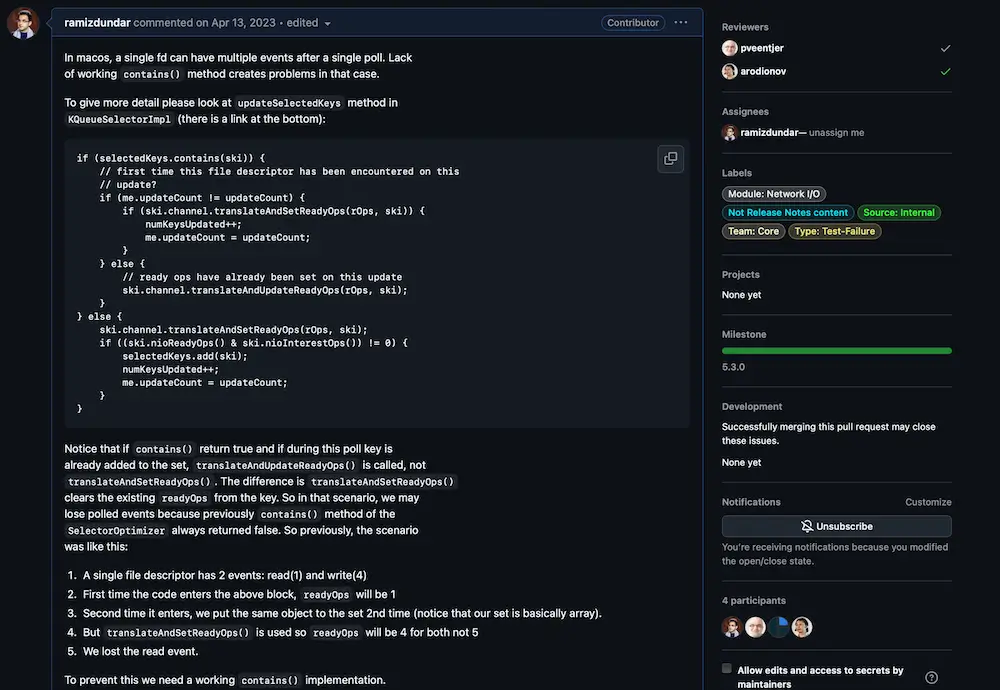
See how I submit my pull requests. More in here.
Screenshot is from this PR.
I'm part of the Gemini Enterprise Connectors team, building connectors that let enterprises
integrate
third-party accounts into Gemini and run agentic actions directly in their workflows. I
co-architected
the Declarative Framework that generates MCP servers from a single textproto, enabling 30+
connectors
(toward 40+) to onboard in under two months. I also owned key control plane and connector
infrastructure work, including provisioning improvements, OAuth migration to Google-managed apps,
and
observability (logs/metrics/SLOs/dashboards) across projects.
My advisor, Nikos Vasilakis, and I, along with the colleagues
I led, built Fractal, a fault-tolerant system for distributed shell-script
execution. The work is now published at NSDI 2026 (primary author), and achieves a
20x average speedup across 77 Bash scripts on a 30-node cluster,
while recovering from node failures. Throughout this project, I gained extensive experience with
Bash
scripting, Python, Go, and gRPC.
Hazelcast started as a distributed in-memory key-value store
and expanded into processing and storage. I joined the Jet (stream processing engine) team as an
intern and moved to the core team shortly after. I was then offered a full-time position and since
it was my first full-time job, I hold very fond memories of this company and learned a lot about
stream processing, concurrency, distributed systems, Java, and its memory model. Before I left for
my master's, I was also part of the TPC team, which aimed to redesign Hazelcast with a
thread-per-core architecture, similar to ScyllaDB or Redpanda. Through this effort, I learned more
about Linux storage APIs and their trade-offs.
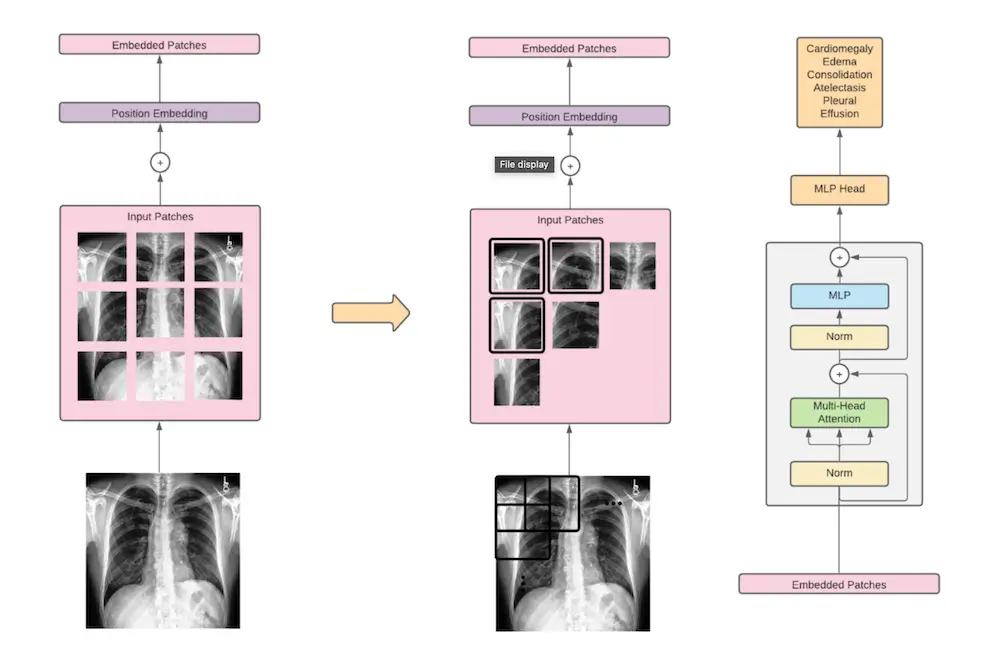
During my time at PragmaCraft, I worked on a project that aimed to summarize the content of
webpages for a given search query in Google search results. I used a combination of extractive and
abstractive summarization techniques to achieve this. I familiarized myself with transformers and
BERT, which were very new at that time. However, because Google implemented the snippet feature,
the project later evolved into Answie, which aimed to
provide semantic search for enterprises.
Fractal is a fault-tolerant distributed execution system for unmodified shell scripts, designed to
parallelize scripts across nodes while recovering efficiently from failures.
Nuke is a privacy-focused, open-source framework that enables application developers to efficiently
manage user data and comply with privacy regulations. As an example, we also implemented and tested
a basic CLI-based social media platform.
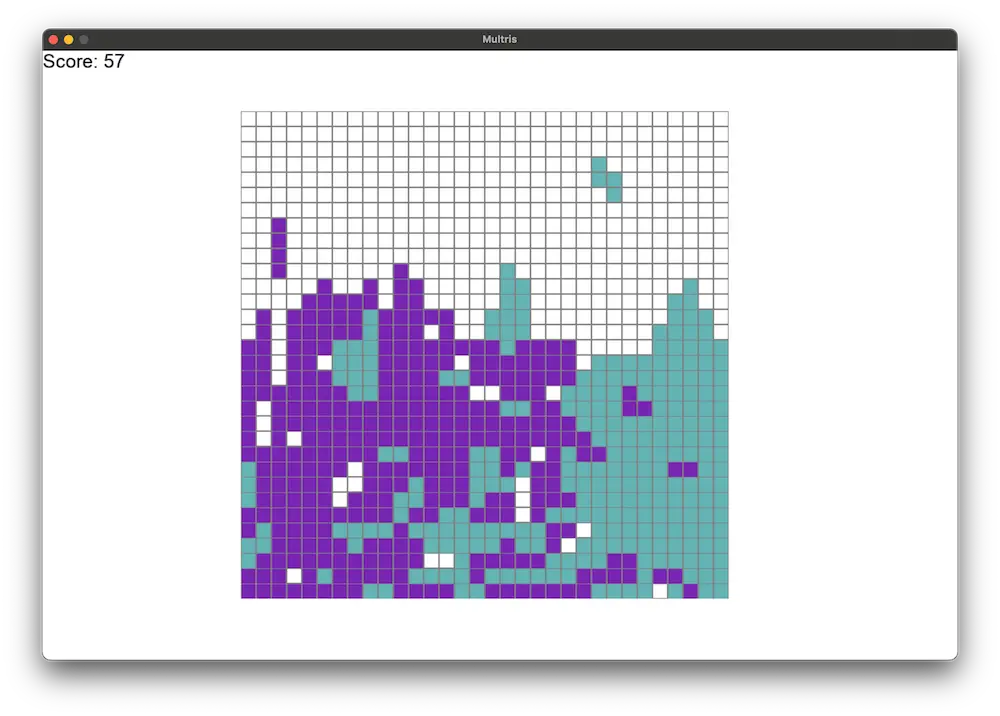
Multris is a multiplayer Tetris game that allows two players on different computers to compete or
collaborate in real-time on a shared game board simultaneously.
A gameplay screenshot from Multris, two players, one board